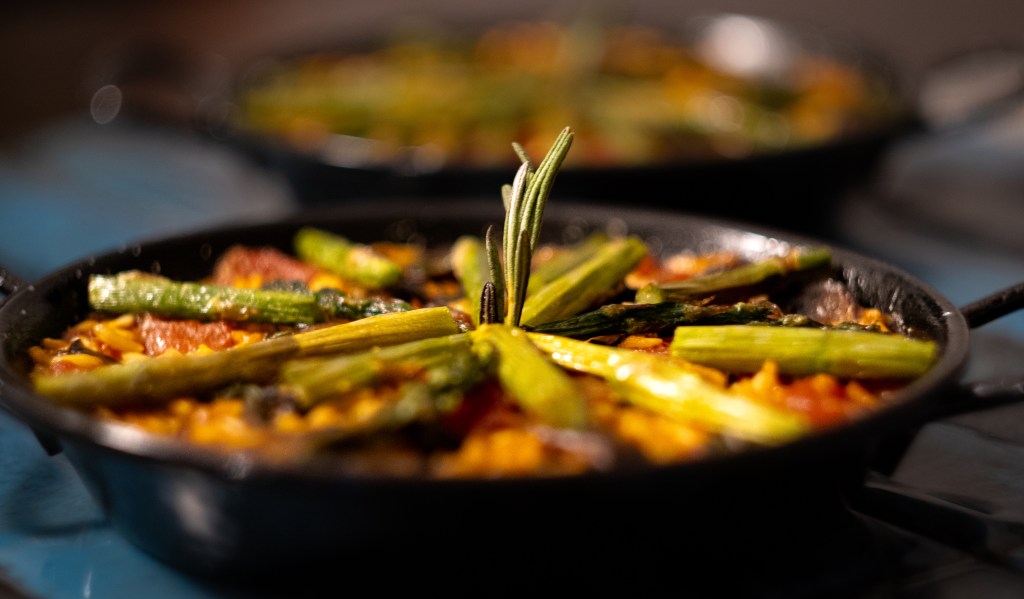
Rice: How Wrong is Wrong?
Valencianos will insist that it’s not really paella if you’re not using the correct rice. I’m by no means a purist, but I’d have to agree. It’s hard to imagine paella with anything but short grain rice. But I keep seeing pictures of people using long grain rice in their paellas, and curiosity got the best of me. I had to see for myself just how “wrong” it would turn out if I ventured outside the traditional rice. Paella is such a wonderful dish with a rich history and tradition, and I believe that using the right rice is important, not only for tradition but also for flavor. That said though, I love exploring the ways it can be personalized and adapted in the kitchen.
Rice is rice, right? At first, it seems there shouldn’t be much difference between using rice meant for paella and what you already have in the pantry. But the thing that makes Calasparra or bomba rice perfect for paella is its ability to absorb a lot of liquid and the fact that when cooked, the grains don’t stick together due to their relatively low amylopectin content (a component of starch). Jasmine rice, on the other hand, won’t absorb enough liquid from the stock, which will give you a loose, watery texture instead of the slightly firm consistency that a good paella should have. Also, long grain rice in general tends to get fluffy and separate when cooked, which makes a socarrat even more difficult to achieve than it already is.
The Pan, the Recipe, and the Ingredients
I personally had not tried to use long grain rice in paella before. I wanted to see for myself if it really would make a noticeable difference if you use the “wrong” rice, and I had the perfect pans to experiment with: two 6-inch enamel pans from La Tienda. Turns out this is also the perfect pan for a personal-sized paella.
This week’s recipe is actually a comparison of two- one with a high-quality rice from Calasparra and the other with whatever the cheapest jasmine rice Costco had. Other than the rice, the recipes were the same.
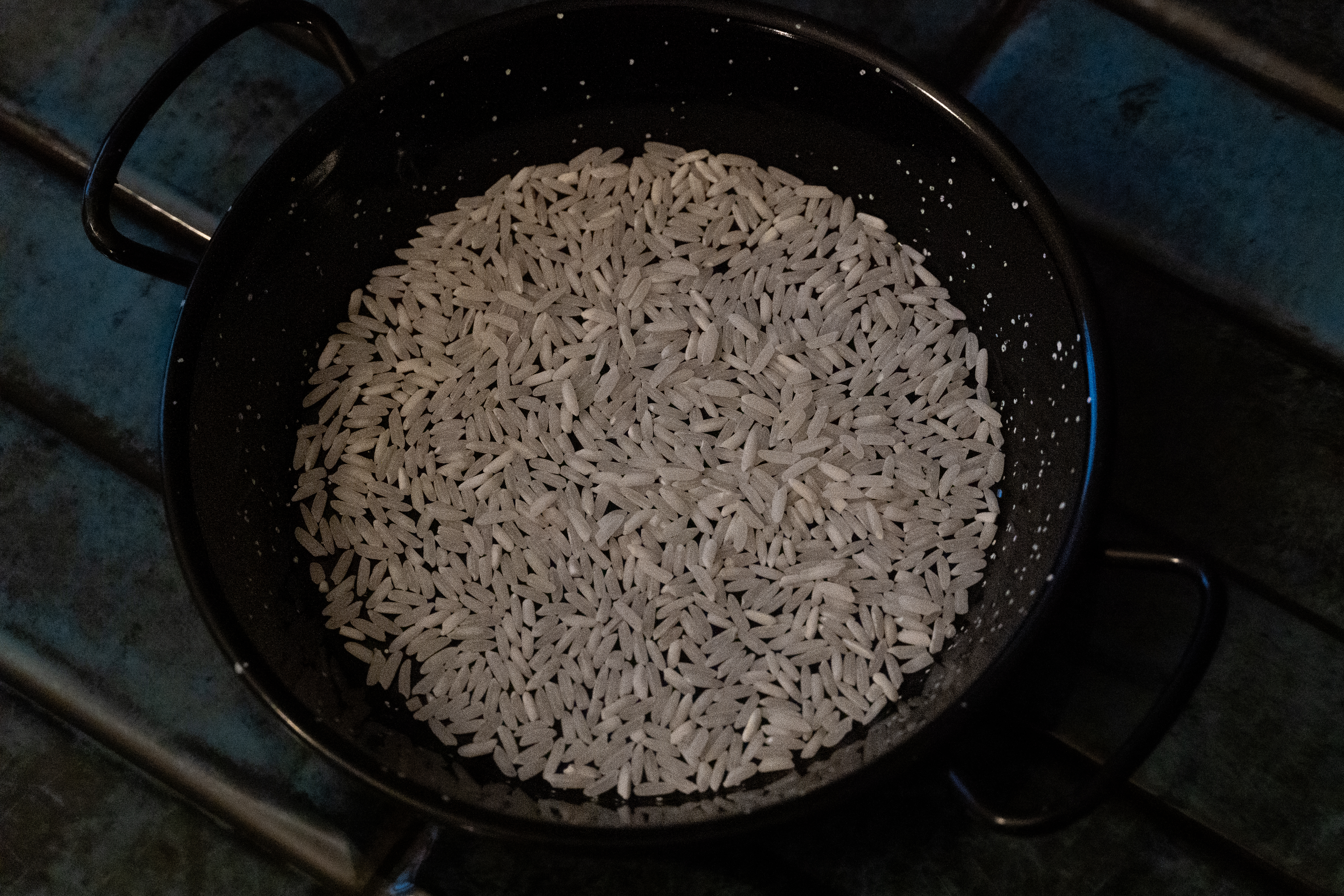
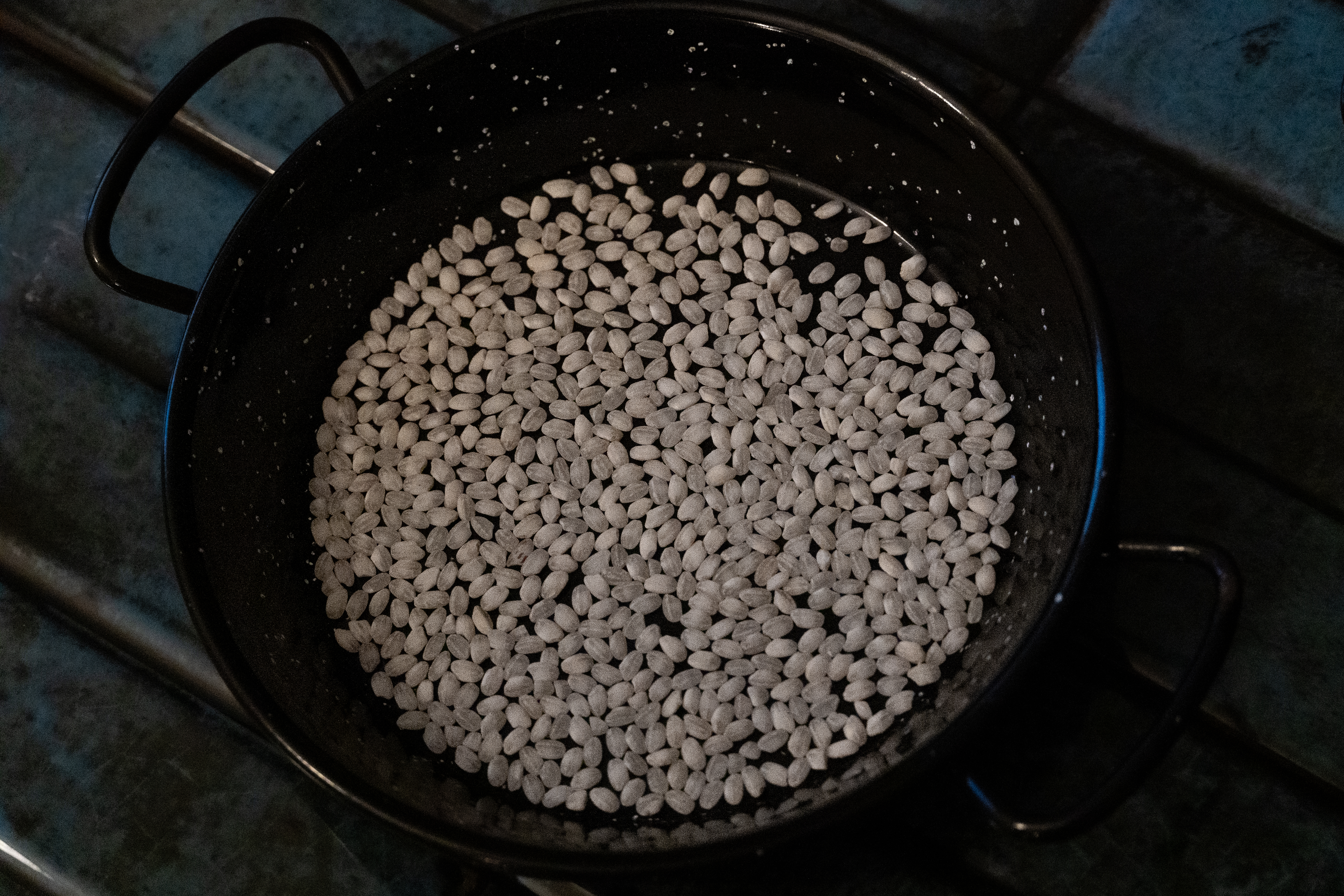
For this week, I decided to try the Arroz de shitakes, esparragos y jamón ibérico recipe from Paella by Omar Allibhoy. I’ve made this once before, and the last time I tried it, it was my best attempt (so far, anyway!), so I figured I could handle making two mini ones at the same time.
I figured my mini pans were about a sixth the area of the pan I had previously used for this recipe, which was 15 inches in diameter. So I adaped the recipe to use only about 1/6 of what was in the book.
The Experiment
First, I found it a little more difficult to cook with such small pans. It was surprisingly hard to keep them at the right temperature. Keeping both at the same temperature was even more challenging since I had them on two separate burners on my electric glass top stove. One was an expandable burner on the small setting, and the other was just one of the smaller burners. I think part of the difficulty in maintaining the same temperature on both was because the knobs are on a different scale. You could use the full range for the small burner but for the expandable one, you only had half the knob to work with.
I found that I didn’t quite reduce the amount of some ingredients for these pans. First, there was too much olive oil. In those tiny little pans, the asparagus ended up being completely submerged in the oil. Next time, I’d probably start with a little less oil. Then I’d add more after frying the asparagus since those get set off to the side until later.
I noticed some differences while cooking the two paellas. The one with jasmine rice needed quite a bit more liquid than the one with Calasparra. I’d guess probably 1.5x ish more stock, but I didn’t keep track of that. While they were cooking, the flavors tasted very similar between the two, which meant that I accurately measured and divided the ingredients between them.
Once they were finished, however, one tasted much, much better. Unsurprisingly, it was the one with the Calasparra rice. For one, it was properly cooked. The jasmine rice was pretty undercooked and was a little crunchy. Also, I had to add more and more stock as it seemed to boil off too quickly. This could have been due partly to the difficulty in maintaining the same temperature between the two pans, but the rice still didn’t really absorb all that delicious stock. It resulted in a slightly soupy final product with rice that was not nearly as flavorful as the Calasparra.
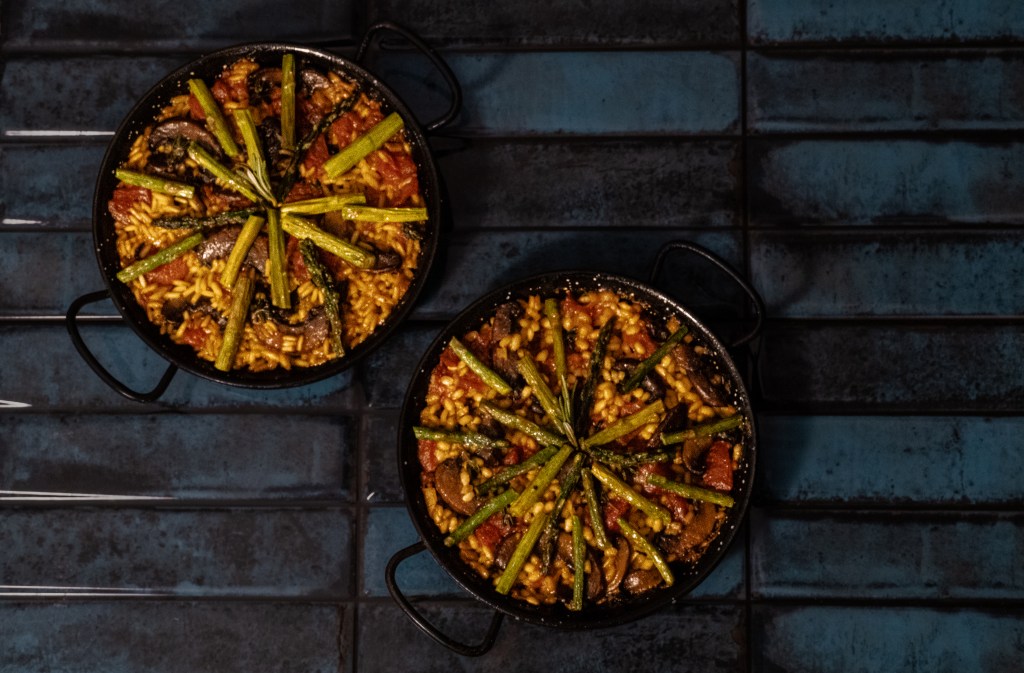
In all, using jasmine rice gave me an undercooked, slightly bland, soupy dish that was a little disappointing to eat. On the other hand though, the one Calasparra rice was great. I still didn’t get a socarrat, but I guess that wasn’t really my focus here. Hopefully the next paella I’ll be able to focus a little more on that.
Consider the Following…
If you’re in a pinch, you might be okay with using jasmine rice. That’s the main takeaway here. But keep in mind: it won’t be as nice as it would with a short grain, and definitely will never be authentic. If you do end up using jasmine rice, I have a few things I think you should keep in mind based on my own experience here.
- Adjust Cooking Temperature: Once you add the rice to your pan, lower the temperature slightly compared to what you’d do for a short grain rice. This will buy you a little more time to make sure the rice cooks fully before the stock evaporates.
- Cover for More Even Cooking: Consider covering your pan for 5-7 minutes. This should help the rice cook more evenly, especially the grains closer to the top, resulting in a more consistent texture.
- Don’t Rinse Your Rice: Avoid rinsing longer grain rices before using them for paella (and the same goes for short grain rice!). Short grain paella rice like bomba or Calasparra is starchier than longer grain varieties. So by rinsing them, you’re removing the excess starch that’s essential for achieving the right consistency.
- Keep in mind though- I didn’t rinse either rice, and the paella with jasmine was still loose and soupy.
Have you experimented with different rice varieties in your own paellas? I’m interested in hearing about what has or has not worked for you! Good luck, and happy cooking!
 Making Paella